COMING SOON

COMING SOON
It’s a Wonderful Life transports audiences to a 1940s radio studio, where a company of celebrated actors gathers to perform Frank Capra’s timeless Christmas classic live on-the-air. Under the direction of four-time Tony Award winner Jerry Zaks, a cast of five actors brings beloved characters to life, transforming before our eyes into the unforgettable George and Mary Bailey, Clarence, Mr. Potter, Uncle Billy and beyond. With a foley artist creating sounds on stage, a live band playing beloved Christmas carols during the commercial breaks, and plenty of theatrical surprises, the story unfolds with all the imagination and spontaneity of an old-fashioned radio broadcast - and all the energy of a Broadway show.
At its heart remains the story audiences have loved for generations: George Bailey, a man who has spent his life putting everyone else first, finds himself at the end of his rope on Christmas Eve - until an unlikely angel shows him what Bedford Falls, and the lives of everyone he loves, might have looked like without him. It’s a Wonderful Life turns a holiday tradition into a shared live experience. Part Broadway play, part Christmas concert, part 1940s radio broadcast, it’s an evening designed to make an audience laugh, sing, and rediscover why this story has endured for 80 years.
It's a Wonderful Life Broadway Show Tickets
HISTORY
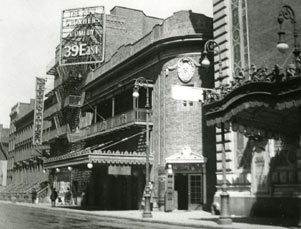
George H. Broadhurst, the Anglo-American manager and playwright (1866-1952), built his eponymous theatre in association with the Shubert brothers. Broadhurst had previously managed theatres in Milwaukee, Baltimore, and San Francisco (and written many popular plays). The playhouse has remained one of the Shubert Organization’s most consistently booked theatres.
ARCHITECTURE
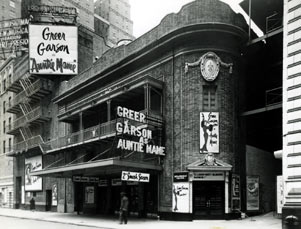
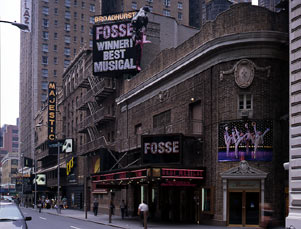
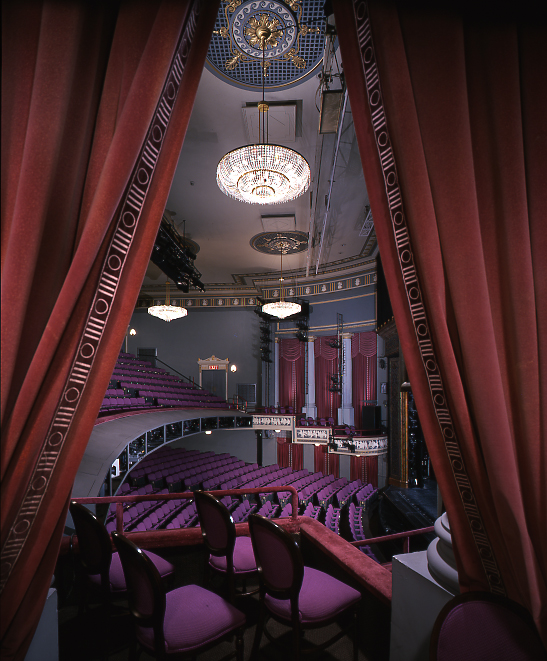
Mirror images of each other, the Broadhurst and the neighboring Plymouth Theatre, which opened within two weeks of each other, were the brainchild of architect Herbert J. Krapp, and were his first independent commissions. While the two playhouses are nearly identical on the outside, the Broadhurst's interior employs Doric columns, and Greek-style cornices and friezes. Its spare exterior is decorated with brickwork, enhanced by touches of stone and terra-cotta trim.
Spotlight on Broadway: Broadhurst Theatre from Spotlight on Broadway on Vimeo.
Access Information
Theatre is not completely wheelchair accessible. There are no steps into the theatre from the sidewalk. Please be advised that where there are steps either into or within the theatre, we are unable to provide assistance.
Shubert Audience Services
The Broadhurst Theatre provides accommodations for patrons who are blind, deaf, partially sighted, and/or have hearing loss, except as permitted for accessibility services. The theatre provides infrared assistive listening devices for every performance at the theatre. In addition, beginning four weeks after a show’s official opening night performance, hand-held audio description devices, hand-held captioning devices, and unlimited access to downloadable audio description and/or captioning for personal mobile devices are all available free of charge. Prior thereto, we offer live-caption via CART using a hand-held device, upon request with two-weeks’ advance notice. For assistance, or If you have questions, contact Shubert Audience Services at 212-944-3700 or audienceservices@shubertorg.com. There is also a representative at the Shubert Audience Services kiosk at every performance to assist any patron with any of our devices, software, or technology. Hand-held devices are limited, although additional devices can be obtained with at least twenty-four hours’ notice.
Accessibility by Seating Section
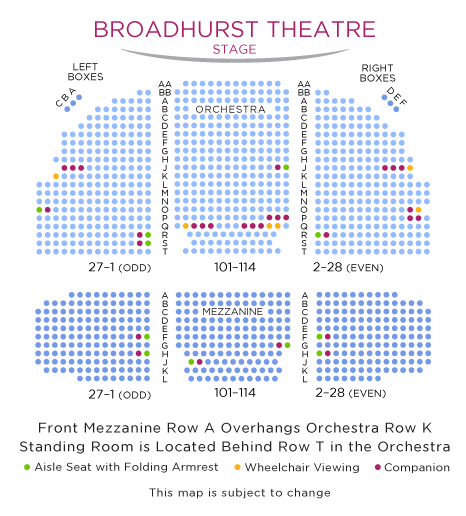
Orchestra Location: Seating is accessible to all parts of the Orchestra without steps. There are no steps to the designated wheelchair seating location.
Mezzanine Location: Located on the Second Level, up 1 flight of steps. Please Note: On the Mezzanine Level, there are approximately 2 steps down per row. Entrance to the Mezzanine is behind row L.
Handrails: Available at the end of every stepped seat row in the Mezzanine.
Wheelchair | Companion Seat Locations:
Orchestra: J24 | J18 - 20; K23 | J17 - 21; O26 | O24, P24 - 26; Q102 | Q103 - 105; Q112 | Q109 - 111; Q113 | P112 -113
Aisle Seat with Folding Armrest | Companion Locations:
Orchestra: J114 | J113; R1 | R3; R2 | R4
Elevators/Escalator
None Available
Restroom
Wheelchair accessible (unisex) restroom is located on the main level.
Water Fountain
Located in the Rear Orchestra. Accessible at 36".
Theatre Policies
The use of cameras, recording devices, cell phones, beepers, and other electronic devices during the performance is prohibited. Everyone attending a performance must have a ticket. Latecomers will be seated at the discretion of management. Wheelchair and mobility-impaired seating is intended for patrons with mobility disabilities, unless medically necessary. Children under the age of four years will not be admitted. No outside food or beverage permitted. No weapons permitted on the premises.
| Year Built | 1917 | |
| Seating Capacity | ||
| Orchestra | 733 | |
| Mezzanine | 429 | |
| Boxes | 24 | |
| Standing Room | 32 | |
| Total | 1218 | |
| Included in the Numbers Above: | ||
| Orchestra Pit | 30 | |
| Wheelchair | 6 | |
| Aisle Transfer Arm | 13 | |
| Theatre Dimensions | |
| Proscenium Opening: | 40' 0" |
| Height of Proscenium: | 25' 0" |
| Depth to proscenium: | 31' 0" |
| Depth to front of stage: | 33' 2" |
| Stage Type: | Proscenium |